Choosing the right tech stack for a fintech product isn't just a technical decision — it's a business one. The wrong choice can mean security vulnerabilities, compliance failures, or an inability to scale when you need it most.
Language Breakdown
Java
Dominant in banking for security reasons. Strong type safety, mature ecosystem, and proven at enterprise scale. The trade-off: higher memory consumption and more verbose code.
Python
Simplified syntax and extensive financial libraries (SciPy, NumPy, pandas) make it ideal for data-heavy fintech products. Best for AI/ML integration, quantitative analysis, and rapid prototyping.
C++
When execution speed matters above all else — think high-frequency trading and quantitative analysis. The complexity is justified only when microseconds count.
Ruby on Rails
Enables rapid, secure development of payment systems and dashboards. Companies like Avant built their lending platforms on Rails.
What UppLabs Recommends
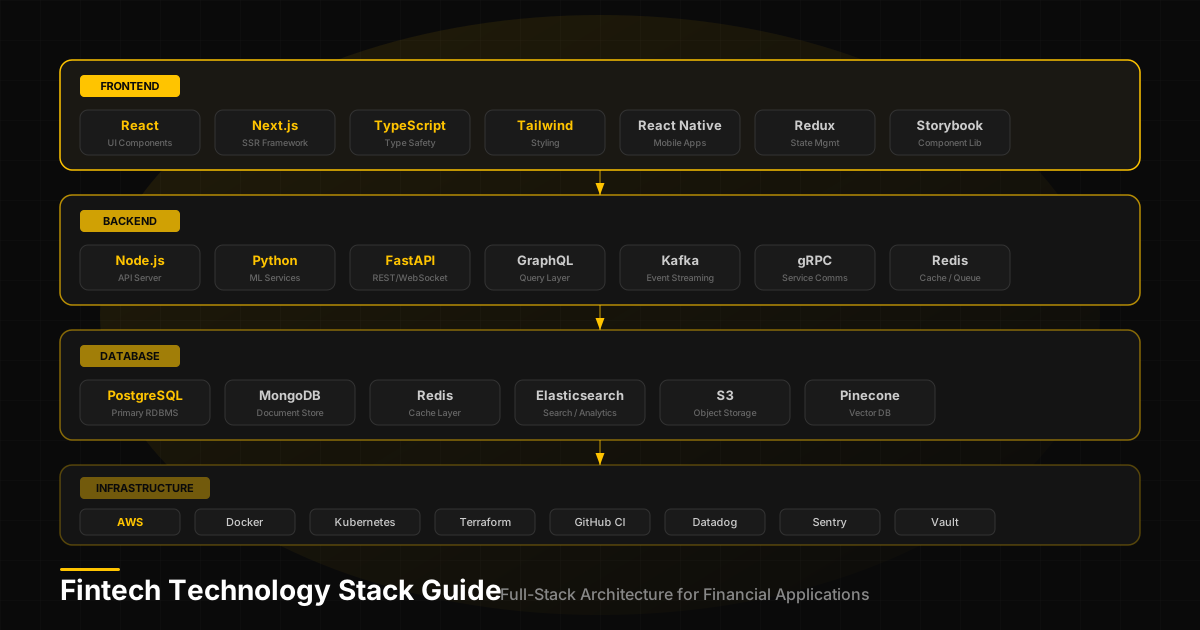
For most fintech startups, we recommend a pragmatic stack:
- Backend: Node.js or Python (depending on AI/ML needs)
- Frontend: React or Next.js
- Database: PostgreSQL (with Redis for caching)
- Infrastructure: AWS or Azure (with compliance certifications)
- Payments: Stripe or Plaid for integrations
The key principle: choose technologies with strong security track records, active communities, and proven compliance tooling. Trendy doesn't mean safe in fintech.