Software development has never moved faster. AI coding assistants accelerate feature delivery, release cycles become shorter, and businesses expect faster innovation without compromising software reliability. Yet faster development does not guarantee better software. When testing cannot keep pace with engineering, every release increases the risk of defects, security vulnerabilities, and costly production incidents.
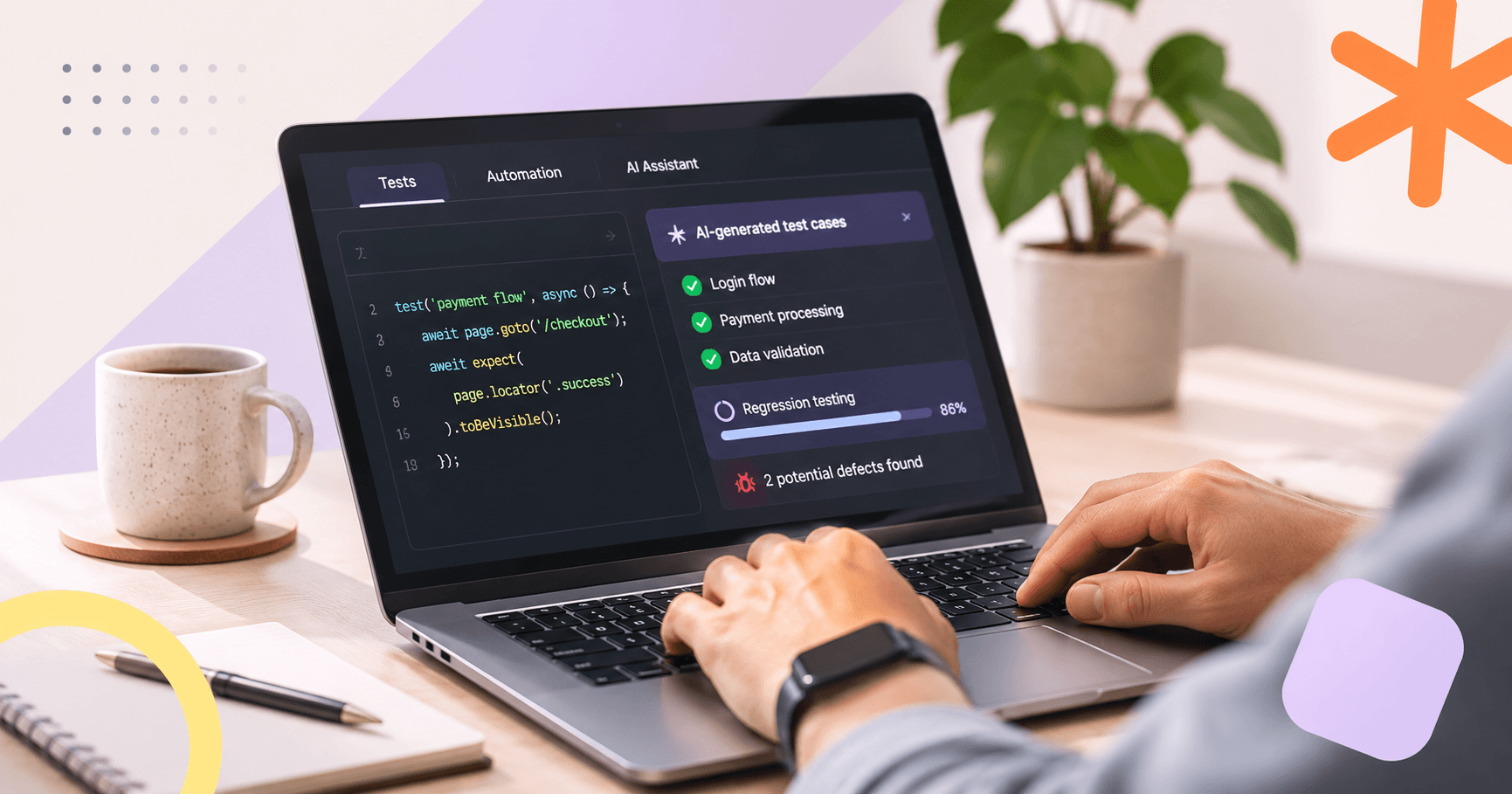
AI in software testing is changing this equation. Intelligent testing systems can generate test scenarios, identify coverage gaps, prioritize high-risk changes, and help engineering teams detect defects before they affect customers.
According to the World Quality Report 2025–2026, organizations adopting AI in quality engineering reported average productivity improvements of 19%. However, only 15% had scaled generative AI across the enterprise, highlighting the gap between experimentation and successful implementation.
For businesses, real opportunity lies not in automating more tests, but in making quality an integral part of software development.
TL;DR
- AI software testing improves test coverage, defect detection, and engineering productivity.
- AI test automation reduces repetitive work through intelligent test generation, self-healing scripts, and risk-based regression testing.
- AI-powered quality engineering integrates continuous validation across the software development lifecycle.
- FinTech, Healthcare, and PropTech businesses can benefit from AI-assisted testing of complex workflows and integrations.
- Successful adoption requires reliable automation foundations, human oversight, security controls, and measurable ROI.
What is AI in Software Testing?
AI in software testing refers to the application of artificial intelligence, machine learning, and generative AI to automate testing activities, improve software validation, and support quality-related engineering decisions.
Traditional automation executes predefined instructions. AI-powered software testing additionally analyzes code changes, application behavior, historical defects, and business requirements to recommend testing scenarios and identify potential risks.
For example, conventional automation verifies whether a payment function works. AI-assisted testing can suggest additional scenarios involving duplicate transactions, expired sessions, interrupted API requests, and inconsistent payment statuses.
Traditional Testing vs. AI-Powered Software Testing
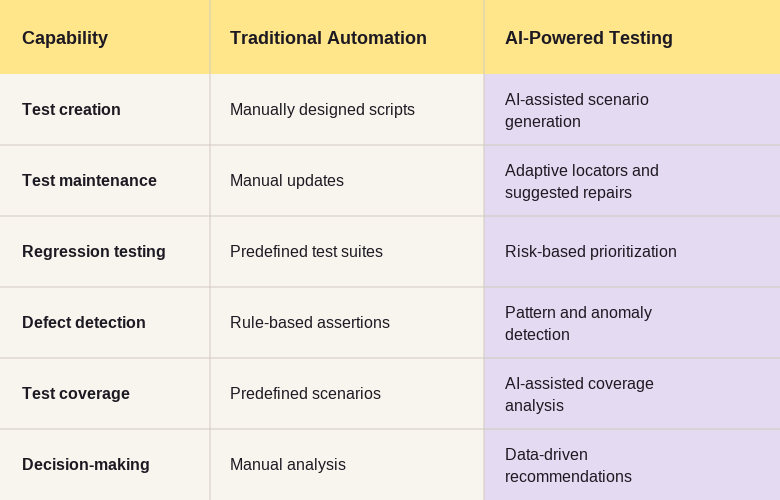
AI for software testing does not replace conventional automation. Instead, it enhances existing frameworks, helping engineering teams adapt to changing requirements and growing software complexity.
How AI Is Transforming Test Automation
AI-driven test automation changes how tests are created, maintained, prioritized, and analyzed. Its greatest value comes from reducing repetitive engineering work while improving the effectiveness of software validation.
AI-Powered Test Case Generation
AI-powered test case generation uses requirements, acceptance criteria, API documentation, and source code to suggest relevant testing scenarios. Software testing with generative AI helps teams create positive and negative test cases, boundary conditions, integration scenarios, and potential edge cases. Generated tests still require human review to ensure that assertions accurately reflect business requirements.
Self-Healing Test Automation
Frequent interface changes often break automated UI tests, even when underlying functionality remains correct. Maintaining these scripts becomes increasingly expensive as applications scale. Self-healing test automation identifies alternative element locators and suggests repairs for broken references. Changes must remain traceable and reviewable to prevent automated repairs from concealing genuine defects.
Predictive Defect Detection and Regression Testing
Predictive defect detection analyzes historical bugs, code changes, dependencies, and previous test results to identify potentially high-risk software components. Combined with automated regression testing, this approach helps teams prioritize critical scenarios and shorten feedback cycles. Changes to payment processing logic, for example, require more extensive validation than minor visual updates.
Agentic AI Testing
Agentic AI testing introduces systems capable of planning testing activities, executing approved actions, analyzing results, and recommending further validation. Within controlled environments, AI agents can review pull requests, generate test scenarios, investigate failures, and prepare defect reports. Human engineers remain responsible for acceptance criteria, permissions, and release decisions. Explore how these capabilities extend beyond testing in our article on how AI agents are transforming software development.
From Traditional QA to AI-Powered Quality Engineering
AI in quality engineering moves software validation beyond isolated testing activities. Quality becomes a continuous engineering responsibility rather than a final checkpoint before deployment.
AI-powered quality engineering supports every stage of the software development lifecycle:
- Requirements: identifying ambiguous acceptance criteria and missing scenarios.
- Development: generating unit and integration tests alongside new code.
- CI/CD: prioritizing tests based on code changes and associated risks.
- Pre-release: analyzing regression results and unresolved quality issues.
- Production: detecting unusual behavior and transforming incidents into new testing scenarios.
Security remains an essential part of this approach. AI-assisted validation complements vulnerability scanning, dependency audits, access control testing, and established DevSecOps practices.
Our guide to security in SDLC explains how continuous validation helps address security risks throughout development.
Key Benefits of AI in Software Testing
Major benefits of AI in software testing come from improving engineering efficiency and software reliability simultaneously. For businesses, these improvements can translate into faster releases, lower maintenance costs, and greater confidence in product quality.
- Faster time-to-market. Intelligent test generation and prioritization shorten feedback cycles and accelerate release validation.
- Improved test coverage. AI helps identify overlooked scenarios, edge cases, and complex integration dependencies.
- Reduced maintenance costs. Adaptive testing capabilities minimize repetitive script updates.
- Earlier defect detection. Risk-based analysis helps identify potential regressions before deployment.
- Greater engineering scalability. Teams can manage growing testing requirements without relying exclusively on additional manual effort.
- Improved customer experience. More effective validation helps reduce the risk of production defects and service disruptions.
Business value depends on measurable improvements in quality and productivity, rather than simply increasing the number of automated tests.
AI Tools for Software Testing: What Should Businesses Choose?
Choosing AI tools for software testing depends on testing maturity, application architecture, existing infrastructure, and business objectives.
Most organizations benefit from enhancing established automation frameworks rather than replacing their entire testing ecosystem.
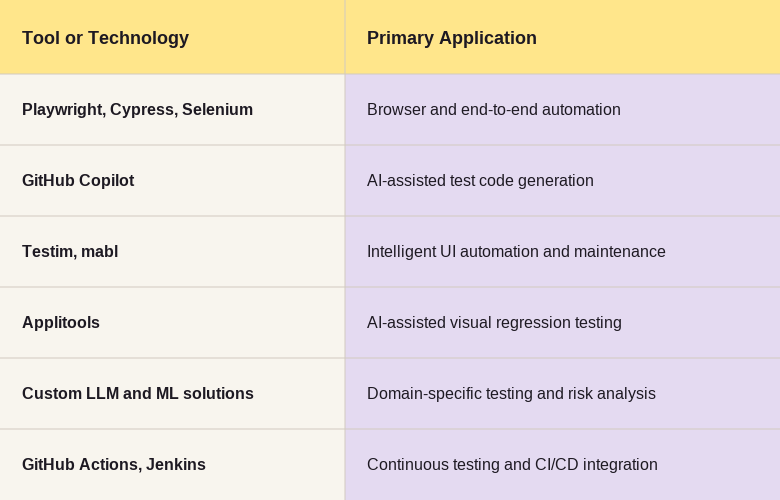
Tool selection should account for integration complexity, licensing costs, data security, deployment options, and ownership of generated tests. Regulated businesses must also evaluate how external AI providers process and retain sensitive information.
AI Software Testing Use Cases Across Industries
AI software testing becomes particularly valuable when software failures create financial, operational, or regulatory consequences. Complex integrations and sensitive data make comprehensive validation especially important in FinTech, Healthcare and PropTech.
FinTech: Transaction Reliability and Financial Accuracy
Financial platforms require accurate calculations, consistent transaction processing, secure integrations, and reliable data exchange. AI-assisted testing can help identify scenarios involving payment failures, duplicate transactions, and reconciliation mismatches.
UppLabs' Tax1099 case study demonstrates the engineering complexity of financial software modernization. Its transition from monolithic architecture to microservices illustrates why comprehensive regression strategies are essential for distributed financial systems.
Healthcare: Data Integrity and Privacy
Healthcare applications must protect sensitive patient information while maintaining reliable integrations and clinical workflows. AI can assist with synthetic test data generation, permission validation, and integration coverage.
Projects such as TimelyCare, a virtual healthcare platform serving colleges and universities across the United States, illustrate the importance of reliable architecture and compliance-aware engineering.
PropTech: Complex Workflows and Integrations
Property technology platforms frequently connect booking systems, payments, pricing engines, and external marketplaces. Changes in one component can affect multiple interconnected business processes.
UppLabs' AMIQA TECH project demonstrates this complexity through hotel operations, booking synchronization, pricing, and payment management. Similar platforms can benefit from AI-assisted validation of synchronization failures, conflicting reservations, and payment interruptions.
Challenges of AI in Software Testing
AI introduces additional risks alongside its advantages. Generating more tests does not guarantee better software when those tests contain incorrect assumptions or inadequate assertions.
Key challenges of AI in software testing include:
- Incorrect outputs: AI can generate plausible but logically invalid test scenarios.
- False confidence: High coverage metrics may conceal weak assertions.
- Data privacy: Logs, requirements, and test datasets may contain confidential information.
- Integration complexity: Legacy systems can limit AI adoption.
- Unpredictability: Generative models may produce inconsistent recommendations.
- Overreliance on automation: Human expertise remains essential for business-critical validation.
Successful implementation requires approved data sources, traceable outputs, controlled access, and clear accountability. Critical workflows, including financial calculations and authorization rules, should continue to rely on deterministic assertions and appropriate human oversight.
How to Use AI in Software Testing : Implementation Roadmap
Businesses should introduce AI gradually, starting with measurable engineering problems rather than technology selection. Controlled adoption makes it easier to demonstrate value before expanding investment.
1. Assess Testing Maturity
Review automation coverage, defect history, release frequency, and maintenance costs. Identify bottlenecks that create the greatest business impact.
Our AI readiness assessment guide provides a foundation for evaluating technical capabilities, governance, and organizational readiness.
2. Select a High-Value Use Case
Prioritize repeatable activities with clear inputs and measurable outcomes. AI-assisted test generation, regression prioritization, and failure analysis are practical starting points.
3. Run a Controlled Pilot
Introduce AI within a limited application area or testing workflow. Compare results against existing processes, measuring review effort, defect detection, and maintenance requirements.
4. Integrate AI Into CI/CD
Connect validated AI capabilities to existing development pipelines. Establish approval requirements, access permissions, fallback mechanisms, and release quality gates.
5. Measure and Scale
Evaluate results across multiple release cycles. Expand adoption only when improvements in quality, productivity, and operating costs justify further investment.
Decision Framework: When Should Your Business Invest in AI Testing?
Not every testing problem requires artificial intelligence. Businesses should determine whether AI addresses limitations that conventional automation cannot solve efficiently.
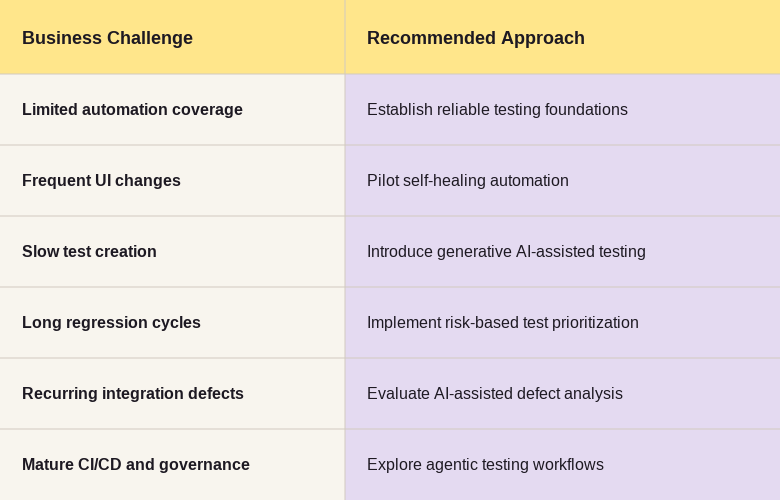
Organizations with immature testing processes should prioritize foundational improvements. Mature engineering teams experiencing maintenance or scalability challenges are generally better positioned to benefit from advanced AI capabilities.
How to Measure the ROI of AI Test Automation
Successful AI adoption should be measured through engineering and business outcomes rather than the number of generated tests. Relevant performance indicators include:
- Test creation and maintenance time.
- Regression testing duration.
- Critical business workflow coverage.
- Defects discovered before and after release.
- Flaky test rates and false positives.
- Release lead time and remediation costs.
Consider an illustrative scenario where a QA team reduces monthly test creation and maintenance effort from 120 to 80 hours, including AI-output review. At an assumed engineering cost of $75 per hour, those recovered 40 hours represent $3,000 in monthly engineering capacity value.
Actual ROI depends on implementation costs, AI licensing, infrastructure expenses, and whether recovered capacity translates into measurable business value without compromising software quality.
How UppLabs Approaches AI-Powered Quality Engineering
At UppLabs, quality is part of software engineering from the beginning. Our approach connects intelligent automation, security validation, continuous integration, and business requirements to support reliable software delivery.
Our Quality Engineering services combine AI-assisted test generation, machine learning-based regression analysis, automated testing, API validation, performance testing, and security checks.
Whether you are developing a FinTech product, modernizing a Healthcare platform, or scaling a PropTech application, UppLabs helps establish testing processes that support sustainable growth and reduce engineering risks.
Ready to make software quality a competitive advantage? Connect with UppLabs experts to identify where intelligent test automation can deliver measurable value for your business.
FAQ
What is AI in software testing?
AI in software testing uses artificial intelligence and machine learning to support test generation, defect detection, test maintenance, and quality analysis. It complements conventional automation by helping teams identify risks and coverage gaps.
Can AI replace software testers?
AI can automate repetitive testing activities but cannot reliably replace human judgment, exploratory testing, or domain expertise. QA specialists remain essential for validating business logic and making critical quality decisions.
What is the difference between AI testing and traditional test automation?
Traditional automation executes predefined scripts, while AI-assisted testing can generate scenarios, recognize patterns, and recommend testing priorities. Both approaches work best together within a controlled engineering process.
How is generative AI used in software testing?
Generative AI helps create test cases, automation scripts, synthetic datasets, and defect summaries from requirements or source code. Generated outputs require review for accuracy, security, and alignment with business requirements.
Is AI software testing suitable for regulated industries?
Yes, provided that implementation includes appropriate data protection, auditability, human oversight, and reliable validation controls. FinTech and Healthcare businesses require particularly careful governance when handling sensitive information.
How can businesses start with AI test automation?
Businesses should identify repetitive testing activities with measurable costs and reliable inputs. Running a controlled pilot allows teams to evaluate efficiency, quality improvements, and ROI before scaling adoption.