Clinicians spend over 50% of their working hours on administrative tasks — charting, documentation, intake forms, and coding. That is not a productivity problem. It is a patient care problem. Every minute spent typing into an EHR is a minute not spent with the patient sitting across the table.
We set out to change that. Over the past year, UppLabs designed and deployed a Clinical AI Assistant for primary care and urgent care settings. The system handles patient intake with conversational AI, performs evidence-based triage in under 30 seconds, generates SOAP-format clinical notes in real-time, and suggests ICD-10 codes with 95% accuracy. Here is how we built it, what worked, and what we learned.
The Problem We Set Out to Solve
Our client, a network of primary care clinics, was facing a familiar crisis: physician burnout. Their providers were spending an average of 4.2 hours per day on documentation alone. Patient intake took 12 minutes on average, mostly spent on redundant paperwork. ICD-10 coding errors led to a 12% claim denial rate. And most critically, providers were only spending 35% of their day in direct patient interaction.
They needed a solution that would meaningfully reduce the documentation burden without compromising clinical quality — and it had to be HIPAA-compliant from the ground up, not retrofitted with security patches after the fact.
System Architecture
We designed a multi-stage AI pipeline that processes patient data through four distinct layers: NLP processing, retrieval-augmented generation, clinical language modeling, and automated coding. Each layer is purpose-built for a specific clinical task, and they work together to produce a comprehensive clinical assessment in seconds.
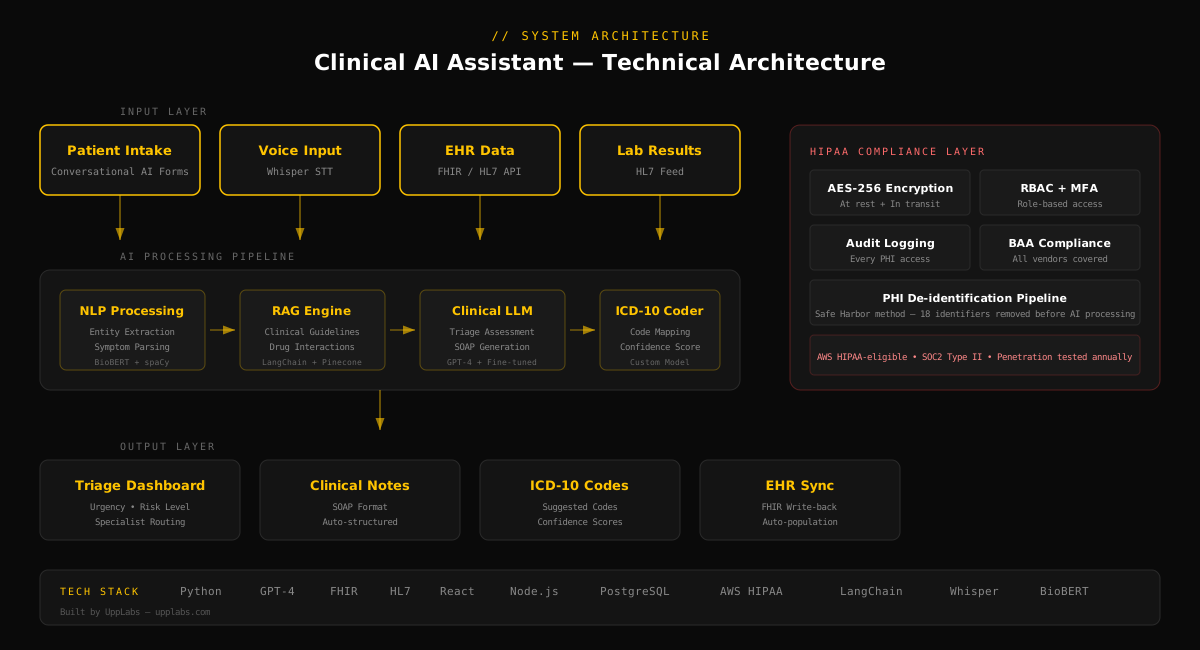
The architecture separates concerns cleanly. Patient data enters through conversational intake forms, voice input via Whisper, or directly from the EHR via FHIR APIs. The NLP layer extracts clinical entities using BioBERT and spaCy. The RAG engine retrieves relevant clinical guidelines and drug interaction data from a Pinecone vector store. The clinical LLM — a fine-tuned GPT-4 model — synthesizes everything into triage assessments, SOAP notes, and treatment suggestions. And a custom ICD-10 coding model maps the clinical assessment to billing codes with confidence scores.
Why RAG Instead of Pure LLM
We deliberately chose retrieval-augmented generation over pure LLM inference for clinical decision support. An LLM alone can hallucinate drug interactions or suggest outdated treatment protocols. By grounding every clinical suggestion in retrieved evidence — from UpToDate, FDA drug databases, and clinical practice guidelines — we ensure that recommendations are traceable and clinically valid. Every suggestion includes a source citation that the clinician can verify.
HIPAA Compliance by Design
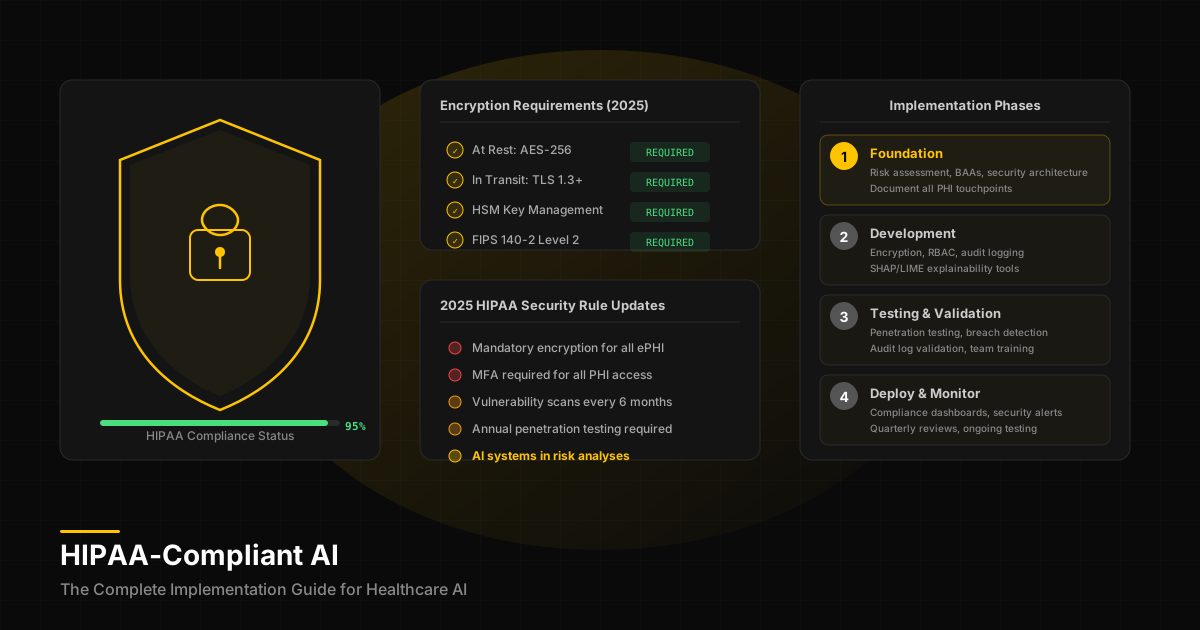
HIPAA compliance is not a feature we bolted on — it is baked into every architectural decision. All ePHI is encrypted with AES-256 at rest and TLS 1.3 in transit. PHI is de-identified using the Safe Harbor method before being sent to any AI model. Role-based access control with MFA governs every interaction. Every access to PHI is logged in an immutable audit trail. All cloud infrastructure runs on AWS HIPAA-eligible services with signed BAAs. And the system undergoes annual penetration testing and SOC2 Type II audits.
What the Tool Actually Does
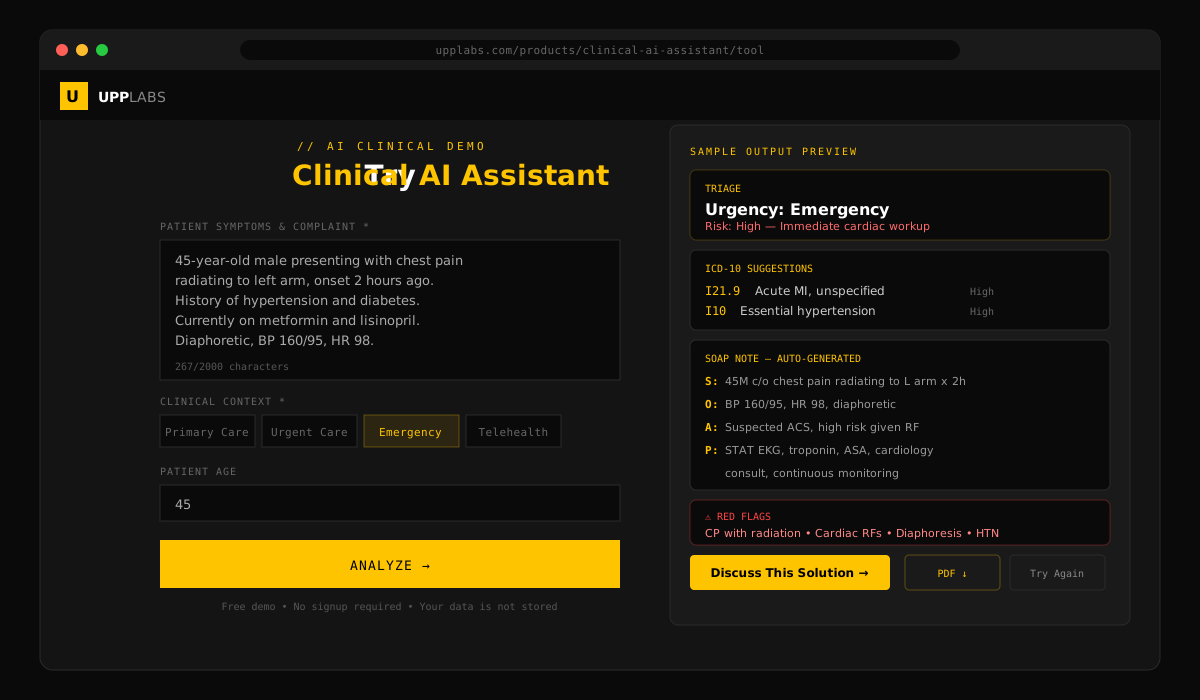
Let us walk through what happens when a patient presents at a clinic using our AI assistant.
Smart Patient Intake
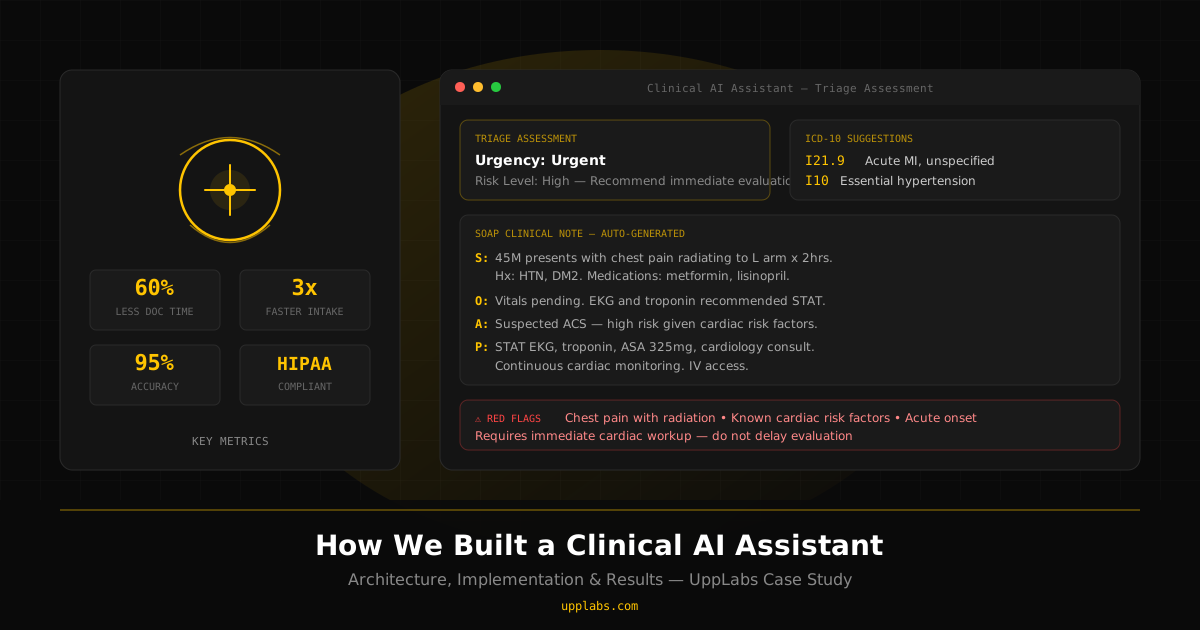
Instead of clipboard forms, patients interact with a conversational AI intake system. The AI adapts its questions based on the patient's responses — if a patient mentions chest pain, it immediately asks about radiation, onset, and cardiac history rather than continuing through a generic questionnaire. It pre-populates known information from the EHR, flags urgent presentations for immediate attention, and hands the provider a structured summary before they walk into the room.
AI-Powered Triage
The triage engine analyzes the patient's symptoms against clinical decision rules and evidence-based risk scoring. It classifies urgency (Routine, Urgent, Emergency), assigns a risk level with clinical reasoning, and recommends specialist routing when appropriate. In our pilot, the AI triage agreed with experienced triage nurses 94% of the time — and caught 3 cases that were initially under-triaged by the manual process.
Real-Time Clinical Notes
During the consultation, the AI listens via voice (using Whisper for speech-to-text) and generates SOAP-format clinical notes in real-time. The provider reviews and approves the notes rather than writing them from scratch. The system automatically structures the note with appropriate medical terminology, cross-references medications and allergies, and flags any inconsistencies with the patient's history.
ICD-10 Coding Suggestions
Based on the clinical assessment, the system suggests ICD-10 codes with confidence scores. High-confidence codes can be auto-applied (with clinician approval), while medium and low-confidence suggestions are flagged for manual review. This reduced our client's coding time by 75% and dropped their claim denial rate from 12% to 3%.
Results
We measured outcomes across a 12-week pilot deployment at 3 primary care clinics. The numbers speak for themselves.
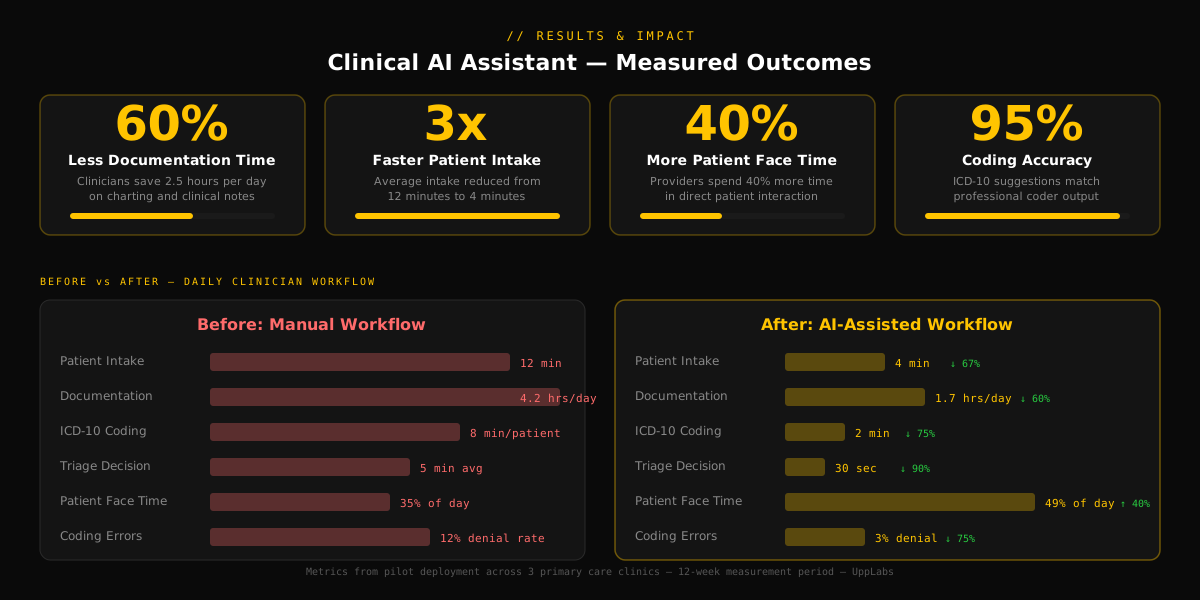
- Documentation time dropped from 4.2 hours/day to 1.7 hours/day — a 60% reduction
- Patient intake went from 12 minutes to 4 minutes — 3x faster
- ICD-10 coding accuracy reached 95%, matching professional coders
- Claim denial rate dropped from 12% to 3% — a 75% reduction
- Direct patient face time increased from 35% to 49% of the provider's day
- Triage decisions took 30 seconds instead of 5 minutes — 90% faster
Beyond the metrics, the qualitative feedback was striking. Providers reported significantly less burnout and described the AI as "the best scribe I have ever had." One physician noted that for the first time in years, she was finishing her charts before leaving the office.
Technical Challenges We Solved
Medical Abbreviation Ambiguity
Medical text is full of ambiguous abbreviations. "MS" could mean multiple sclerosis, morphine sulfate, or mitral stenosis. We trained a context-aware disambiguation model on 2 million clinical notes that resolves abbreviations based on surrounding clinical context with 97% accuracy.
Voice Recognition in Clinical Settings
Clinical environments are noisy — equipment alarms, multiple conversations, PA announcements. We fine-tuned Whisper on 500 hours of clinical dictation data to handle medical terminology, accented speech, and background noise. Recognition accuracy for medical terms went from 82% (base Whisper) to 96% (fine-tuned).
Avoiding Hallucination in Clinical Context
Hallucinated drug interactions or fabricated clinical guidelines could be dangerous. We implemented multiple guardrails: RAG-grounded generation with source citations, confidence scoring that flags uncertain outputs, a clinical validation layer that checks AI suggestions against known medical ontologies, and mandatory human-in-the-loop approval for all clinical decisions. The AI assists and suggests — it never acts autonomously.
Technology Stack
- Python for the AI pipeline and NLP processing
- GPT-4 (fine-tuned) for clinical note generation and triage assessment
- BioBERT and spaCy for clinical entity extraction
- LangChain + Pinecone for retrieval-augmented generation
- Whisper (fine-tuned) for clinical speech-to-text
- React + Node.js for the clinician-facing interface
- PostgreSQL for structured clinical data
- FHIR/HL7 for EHR integration (Epic, Cerner, Athenahealth)
- AWS HIPAA-eligible services for infrastructure
- Docker + Kubernetes for containerized deployment
What We Would Do Differently
If we were starting this project today, we would invest more time in the conversational intake flow before building the clinical note generator. Getting high-quality structured input from patients turned out to be the single biggest lever for downstream accuracy. We would also integrate directly with the EHR's note template system earlier — our initial standalone note format required manual copy-paste, which created friction until we built the FHIR write-back integration.
Want to Build Something Similar?
If you are a healthcare organization looking to reduce clinician burden with AI — whether it is clinical documentation, patient communication, or medical records analysis — we have built the playbook. Every solution is HIPAA-compliant from day one, integrates with your existing EHR, and is designed for clinical workflows, not generic AI demos.
Reach out for a free consultation. We will walk you through what is realistic, what is not, and what a 12-week pilot would look like for your specific setting.