The software development landscape is undergoing a fundamental shift. AI agents — not simple code completion tools, but autonomous systems that reason, plan, and execute complex workflows — are reshaping how we build software in the most demanding industries.
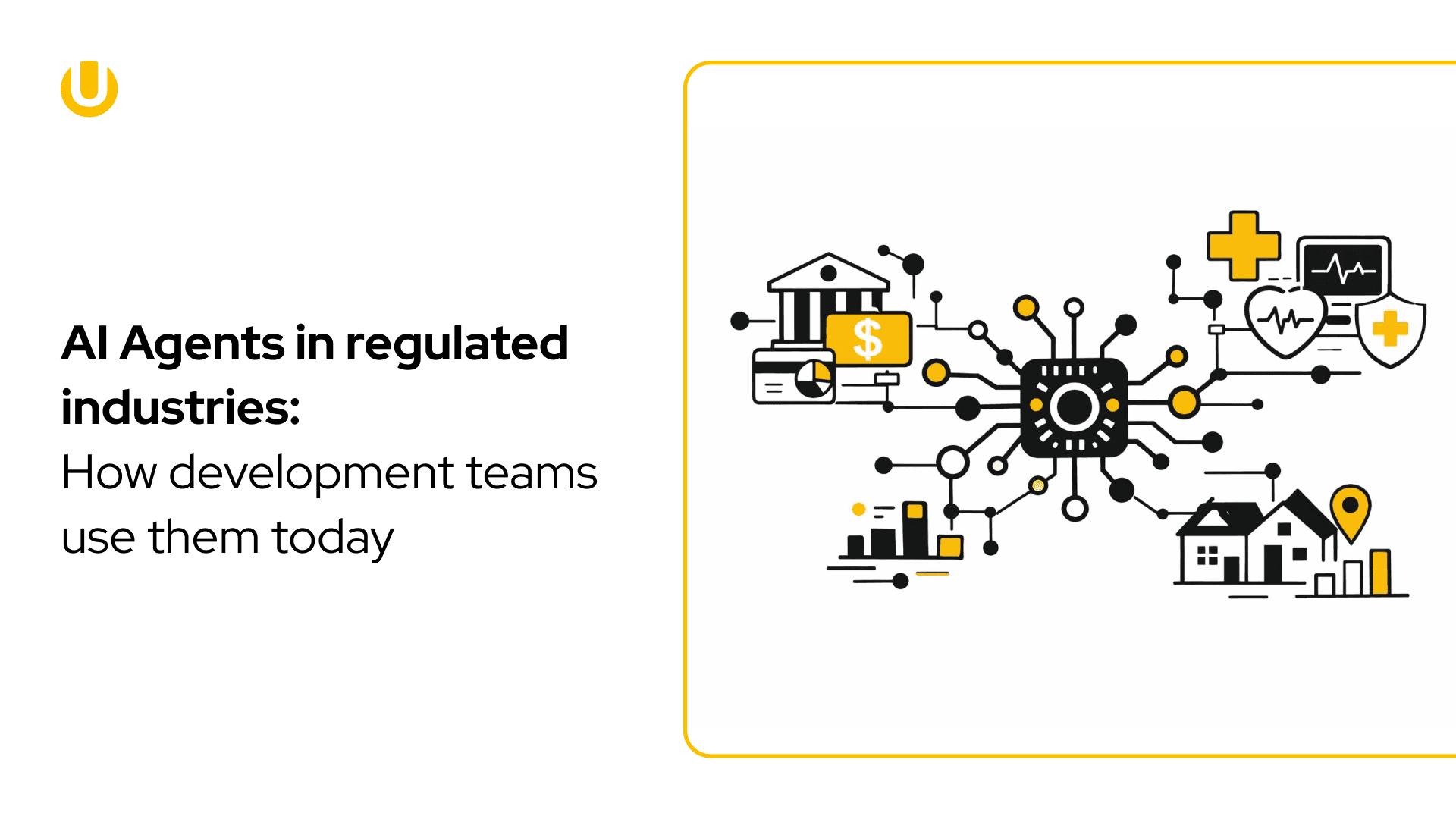
At UppLabs, we've integrated AI agents across our development workflows for fintech, healthcare, and real estate clients. The results have been transformative, but not in the way most people expect. The biggest value isn't just speed — it's quality, consistency, and compliance.
Fintech: Speed and Compliance at the Intersection
Financial technology faces competing pressures: rapid feature deployment and comprehensive compliance documentation. In a recent lending platform engagement, we deployed coordinated AI agents across the development pipeline.
One agent monitors regulatory requirement changes — CFPB guidance, state lending rules — in real-time. Another cross-references these changes against the existing codebase, flagging potential compliance gaps. A third drafts preliminary compliance documentation that human reviewers validate at defined checkpoints.
The outcomes were significant: reduced time on regulatory document review, accelerated compliance reviews, and more targeted code reviews. Agent-driven QA specifically addressed fraud detection logic, transaction edge cases, and rate calculation errors — the areas where bugs are most costly.
Healthcare: Precision, Privacy, and Requirements Clarity
Healthcare software demands precision where misunderstood EHR integration requirements or incorrect HL7 message data types directly affect patient care. AI agents serve as persistent translation layers between clinical requirements and technical implementation.
Agents cross-reference user stories and acceptance criteria against HIPAA technical safeguards and clinical standards. The orchestration platform provides audit trails and permission structures enabling AI tool use without creating compliance risks.
Agent-driven workflows compressed healthcare API integration projects significantly — reading interface specs, generating stub implementations, and flagging ambiguities for human review before a single line of production code was written.
Real Estate: Managing Complexity at Scale
Real estate technology involves jurisdictional variation, document processing, legacy MLS system integration, and title/escrow logic. In a transaction management platform engagement, we deployed agent workflows monitoring support escalations and mapping recurring issues to feature areas.
AI agents assisted document processing layers for purchase agreements, addenda, inspection reports, and title commitments — handling extraction and validation at scale that would require a much larger team to manage manually.
Practical Implementation Patterns
- Human oversight remains non-negotiable in regulated environments
- High-volume, high-repetition tasks show the strongest value: compliance cross-referencing, test generation, document extraction, requirement gap flagging
- Agents augment rather than replace domain expertise
- Orchestration infrastructure is essential — coordinated agent sets managing different workflow segments require robust platforms
The industries positioned to benefit most from AI-assisted development are those least able to tolerate implementation failures. That's the paradox — and the opportunity. The infrastructure surrounding AI models matters more than individual model capability.