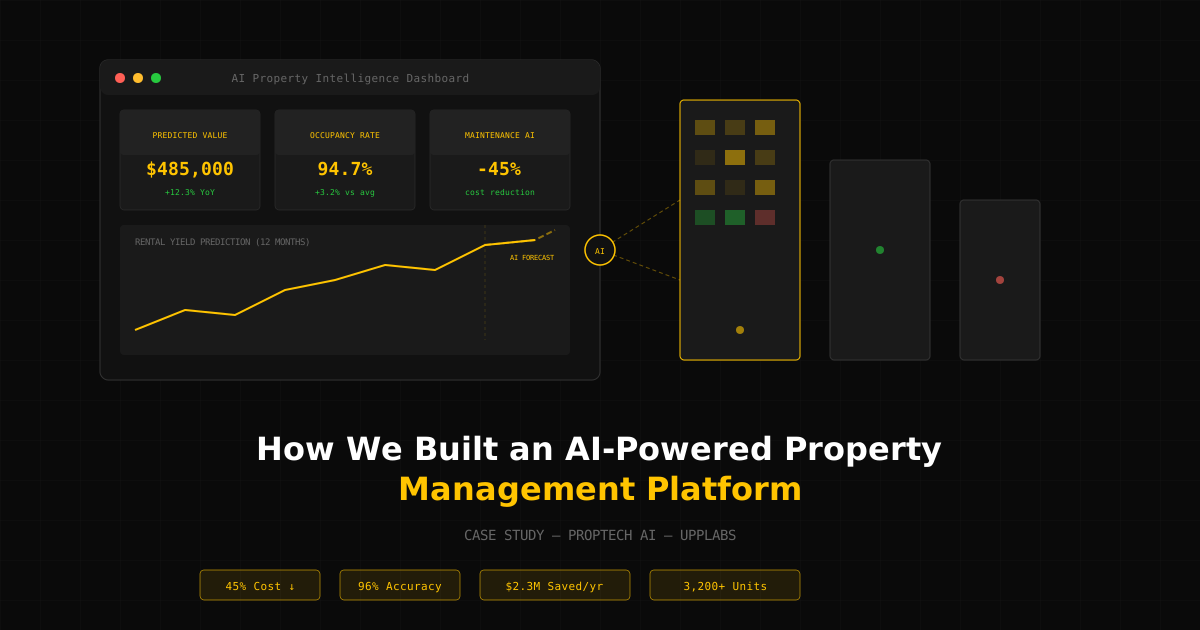
When a mid-size property management company approached UppLabs, they were drowning in manual processes. Managing 3,200+ residential units across 12 cities with spreadsheets, phone calls, and reactive maintenance was costing them millions annually. Their vacancy rates hovered at 11%, maintenance response times averaged 72 hours, and tenant turnover was eating 23% of their revenue.
Nine months later, their operating costs dropped 45%, vacancy rates fell to 4.2%, and maintenance became predictive instead of reactive. This is the story of how we built an AI-powered property management platform that transformed their business.
The Problem: Death by Manual Process
The company managed a diverse portfolio — apartment complexes, single-family rentals, and mixed-use buildings. Every property had its own quirks, and the management team was spending most of their time on repetitive tasks instead of strategic decisions.
- Tenant screening took 3-5 days per application, with inconsistent criteria across properties
- Maintenance requests came in via phone, email, and text — with no centralized tracking
- Lease renewals were handled manually, often missing optimal pricing windows
- Vacancy forecasting was guesswork, leading to either overspending on marketing or prolonged empty units
- Energy costs varied wildly between similar properties with no clear explanation
Their existing software was a patchwork of Yardi, spreadsheets, and a custom PHP app from 2014. Nothing talked to anything else. Property managers spent 60% of their time on data entry and coordination instead of tenant relations and property optimization.
Our Approach: AI at Every Layer
We designed the platform around four AI-powered modules, each addressing a critical pain point. The architecture was built on Next.js for the management dashboard, Python/FastAPI for the AI services, PostgreSQL for structured data, and a vector database for document search.
1. Predictive Maintenance Engine
The biggest cost saver. We integrated IoT sensor data from HVAC systems, water heaters, and electrical panels with historical maintenance records. A gradient-boosted model trained on 4 years of work orders predicts equipment failures 2-3 weeks before they happen.
The system automatically generates maintenance tickets, orders common replacement parts, and schedules technicians during off-peak hours. Emergency maintenance calls dropped 67%, and the average repair cost fell from $340 to $180 because issues were caught early.
2. AI Tenant Screening & Matching
We replaced the manual screening process with an ML model that evaluates applications in under 60 seconds. The model considers credit history, rental history, income verification, and employment stability — but goes further by predicting tenant longevity based on lifestyle factors and property fit.
The matching algorithm considers more than just ability to pay. It looks at commute patterns, nearby amenities that match stated preferences, and historical data about which tenant profiles tend to stay longest at which property types. The result: 30-day turnover dropped from 8% to 2.1%, and average tenancy increased from 14 months to 22 months.
“The AI screening cut our vacancy time from 28 days to 9 days on average. But the real win was matching — tenants who fit the property stay longer, and that compounds into massive savings.”
3. Dynamic Pricing & Lease Optimization
Rent pricing was previously set annually based on gut feel and Zillow comps. We built a dynamic pricing model that factors in 47 variables: local market conditions, seasonal demand, property condition scores, comparable listings within a 2-mile radius, upcoming lease expirations in the portfolio, and even local job market trends.
The system recommends optimal pricing for new listings and lease renewals, with confidence intervals. It also predicts which tenants are likely to leave at renewal time — allowing the team to proactively offer incentives to high-value tenants before they start shopping. Revenue per unit increased 12% without raising rents above market rates.
4. Automated Document Processing
Lease agreements, inspection reports, maintenance invoices, and compliance documents were all processed manually. We built an NLP pipeline that extracts key terms from leases, flags non-standard clauses, auto-generates inspection checklists from property histories, and routes compliance documents to the right team.
The document processing module handles 2,000+ documents per month with 96.3% extraction accuracy. Staff time spent on document review dropped from 120 hours/month to 15 hours/month — and accuracy actually improved because the AI catches clauses that humans skim over.
The Tech Stack
- Frontend: Next.js 14 with real-time dashboards, React Native for the tenant mobile app
- Backend: Python/FastAPI for AI services, Node.js for the management API
- AI/ML: Scikit-learn and XGBoost for predictive models, OpenAI GPT-4 for document processing, custom embeddings for property matching
- Data: PostgreSQL for transactional data, Pinecone for vector search, Redis for caching
- Infrastructure: AWS ECS, CloudWatch for monitoring, Terraform for IaC
- Integrations: Yardi, Zillow API, Plaid for income verification, Stripe for payments
Results After 6 Months in Production
- 45% reduction in operating costs ($2.3M annual savings)
- Vacancy rate dropped from 11% to 4.2%
- Maintenance response time: 72 hours → 8 hours (predictive) or 4 hours (emergency)
- Tenant screening: 3-5 days → under 60 seconds
- Average tenancy increased from 14 to 22 months
- Revenue per unit up 12%
- Document processing: 120 hours/month → 15 hours/month
- 96.3% accuracy on automated document extraction
Lessons Learned
Building AI for property management taught us several things that apply broadly to PropTech:
- Start with the data you have. The client had 4 years of maintenance records in spreadsheets — messy, but enough to train accurate predictive models. You don't need perfect data to start.
- Predictive maintenance has the fastest ROI. If you're choosing where to apply AI first in property management, start here. The cost savings are immediate and measurable.
- Tenant matching matters more than tenant screening. Anyone can check a credit score. The real value is predicting which tenants will thrive at which properties.
- Integration is harder than AI. Getting Yardi, IoT sensors, payment processors, and our AI services to work together smoothly took 40% of the project timeline.
- Property managers need explainable AI. Every recommendation includes a plain-English explanation. "Raise rent to $1,850 because comparable 2BR units within 1.5 miles average $1,920 and your property scores higher on amenities" gets adopted. A number without context gets ignored.
Is AI Right for Your PropTech Product?
If you manage 500+ units, the answer is almost certainly yes. The ROI on predictive maintenance alone typically pays for the entire platform within 8-12 months. If you manage fewer units, start with document processing and tenant screening — these are lower-cost AI features that still deliver significant time savings.
At UppLabs, we've built AI-powered PropTech solutions for property managers, real estate marketplaces, and commercial real estate analytics platforms. If you're exploring how AI can transform your property operations, we'd love to talk. Schedule a free consultation to discuss your specific use case.