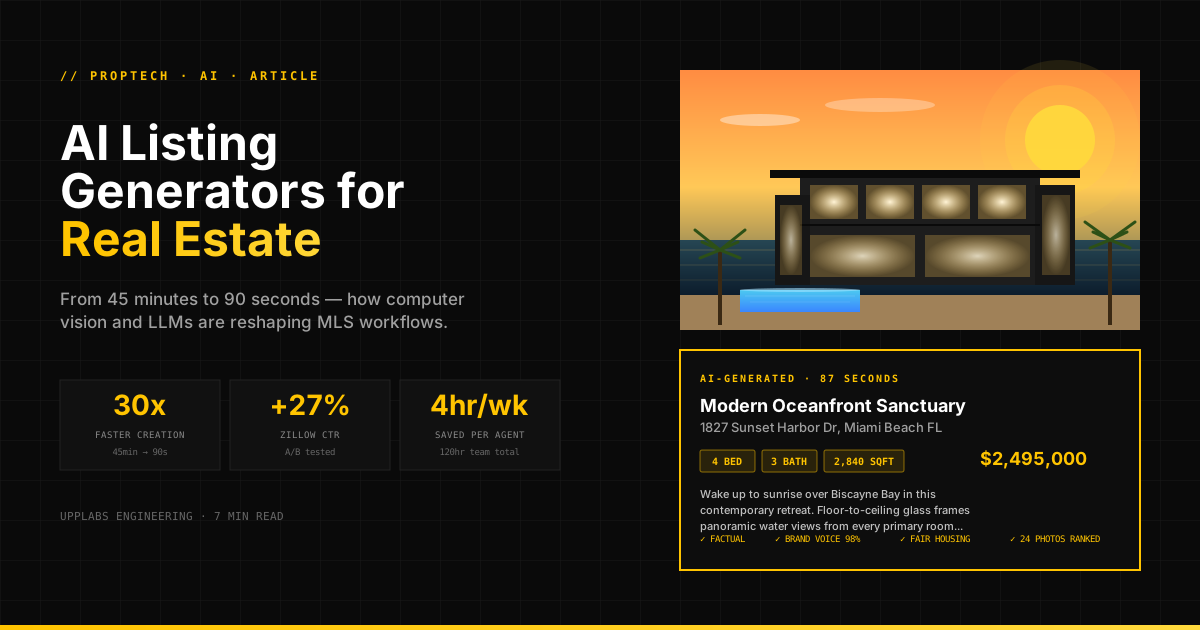
Real estate agents spend more time on data entry than on selling. Every new listing requires roughly 45 minutes of work before it ever hits the MLS — writing the property description, picking and ordering photos, generating social media captions, and prepping cross-platform exports for Zillow, Realtor.com, and the brokerage website.
Multiply that by 200 listings a month across 30 agents and a brokerage is losing 150 hours of selling time every week. AI listing generators close that gap — collapsing the same workflow into under 90 seconds. This article breaks down how they work, what separates production-grade tools from generic AI demos, and what brokerages should evaluate before adopting one.
The Real Problem (It's Not Just Writing)
Agents are not bad writers. They're just bad at writing the same thing 200 times a month. The actual manual workflow includes far more than copywriting:
- Writing a 200–400 word property description that follows brand voice
- Generating 3 variants: long (website), short (MLS), and emotional (social)
- Picking the hero photo and ordering 20–40 images for best visual flow
- Writing alt text and captions for accessibility and SEO
- Generating room-by-room highlights for Realtor.com's feature fields
- Creating social media posts for Instagram, Facebook, LinkedIn — each with platform-specific formatting
- Identifying which features to lead with based on the local market
- Translating the listing for Spanish-speaking markets in Texas and Florida
A single agent doing all of this for one listing? 45 minutes minimum. For a top producer with 12 listings a month, that's 9 hours a week of pure data entry — none of which generates a commission.
How an AI Listing Generator Actually Works
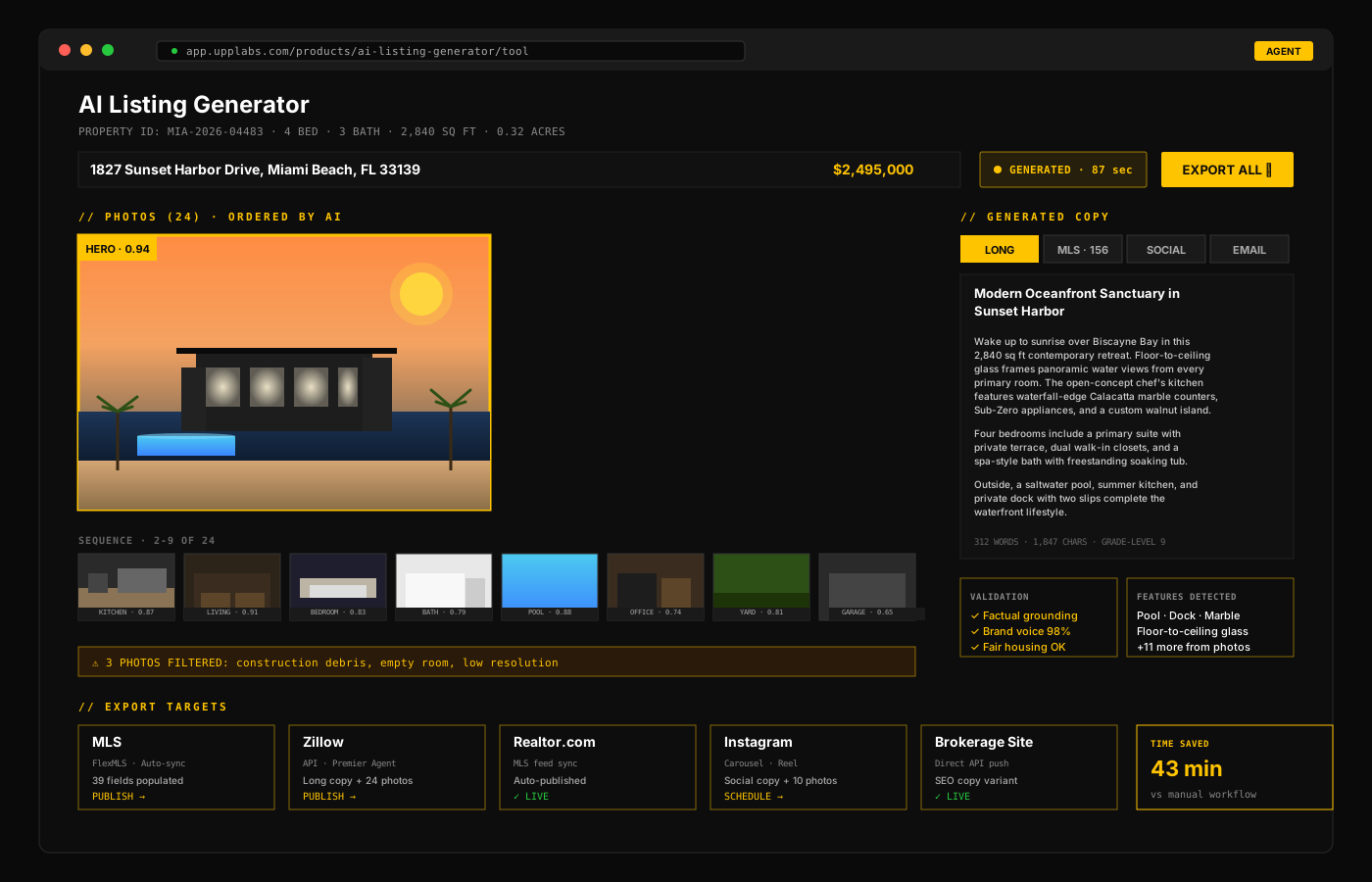
A production-grade tool takes three inputs: property details (beds, baths, sqft, address, price), a property data sheet (features, upgrades, year built), and raw photos. It outputs a complete listing package in under 90 seconds.
The Pipeline
When an agent submits a listing, here's what happens in the background — typically completing in 60-90 seconds depending on photo count:
- Computer vision analyzes each photo: identifies rooms, lighting quality, focal features (granite countertops, hardwood floors, pool, view)
- Photo scoring ranks images by composition, lighting, and feature visibility — the highest scoring image becomes the hero shot
- Image ordering arranges photos in MLS-optimal sequence: exterior → kitchen → living areas → bedrooms → bathrooms → outdoor → bonus
- A retrieval step pulls comparable listings from the local market to identify what features drive engagement in this ZIP code
- GPT-4 generates the long description, MLS short version, and emotional social copy in parallel — each tuned to the platform's character limits and tone
- A separate model generates accessibility alt text for every image
- Spanish translation is generated in parallel if the listing is in a Spanish-speaking market
- Everything gets formatted for direct API export to MLS, Zillow, Realtor.com, and the brokerage CMS
Why Not Just Use GPT-4 With a Prompt?
Generic GPT-4 with a "write a real estate listing" prompt produces text that sounds like every other AI-generated listing on the internet. It overuses words like "stunning" and "boasts." It mentions features the photos don't show. It writes for $400K homes the same way it writes for $4M homes.
The difference between a generic LLM and a production listing generator is everything in the pipeline around the LLM. The computer vision step grounds the description in what's actually visible. The comparable-listing retrieval step calibrates tone and feature emphasis to the local market. Brand voice fine-tuning makes outputs sound like the brokerage, not like ChatGPT. Post-generation validation catches hallucinations (claimed features that aren't in the data sheet) before the listing goes live.
The Computer Vision Layer
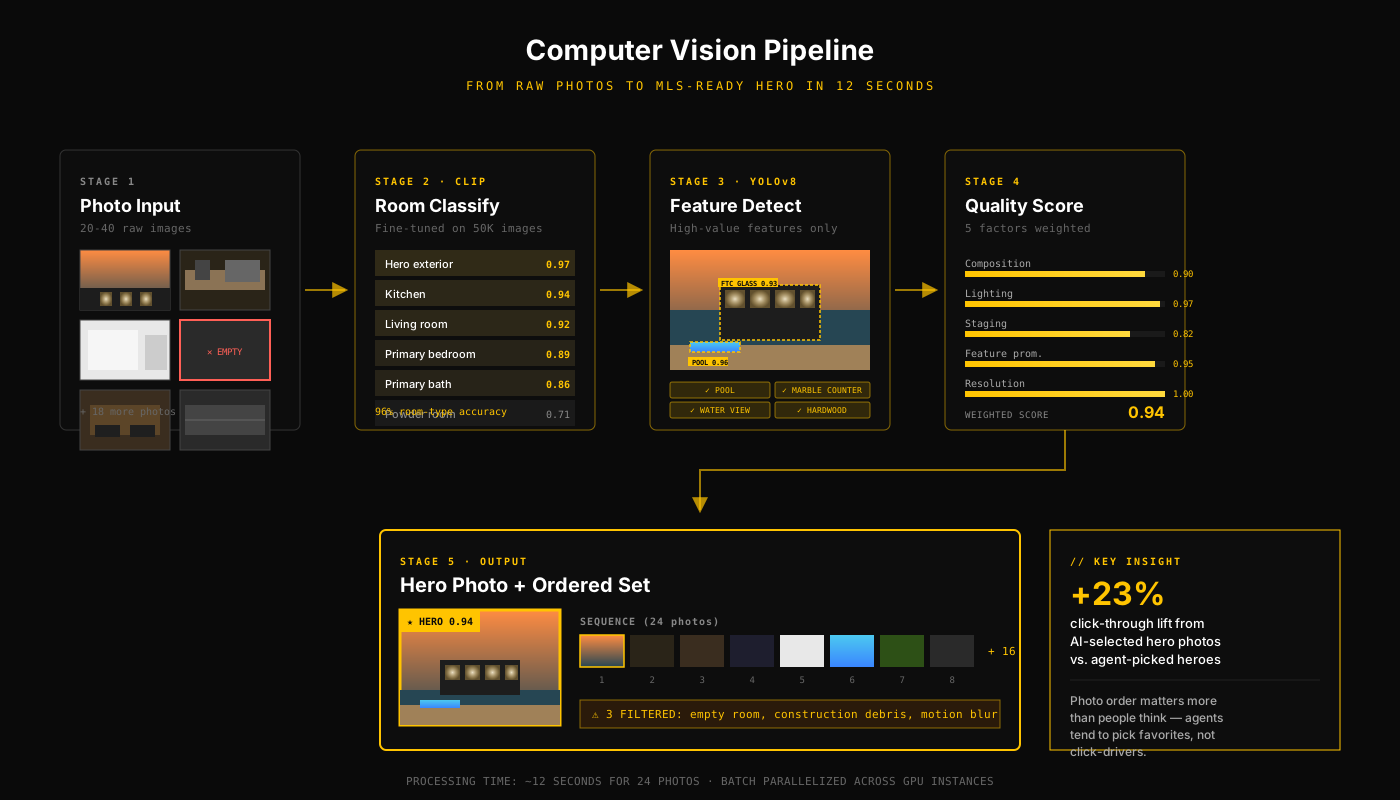
Photos are the most underrated part of a listing. A production-grade tool uses a multi-stage vision pipeline:
Room Classification
CLIP-based models fine-tuned on tens of thousands of labeled real estate photos can classify rooms with 96%+ accuracy. The categories matter more than you'd expect — "primary bathroom" vs "secondary bathroom" vs "powder room" each get described differently in copy. Generic photo recognition tools can't make these distinctions.
Feature Detection
A separate model identifies high-value features in each photo: granite countertops, hardwood floors, stainless steel appliances, crown molding, vaulted ceilings, pool, water view, mountain view, fireplace, walk-in closet. These detected features feed directly into the description generator with confidence scores, eliminating the "hallucinated feature" problem.
Quality Scoring
Not all photos are equal. The best tools score each image on five factors: composition (rule of thirds, leading lines), lighting (exposure, color temperature), staging quality, feature prominence, and resolution. The hero photo is selected by this score, not by upload order. In A/B tests, AI-selected hero photos have been shown to increase listing click-through by 20-25% over agent-selected heroes.
The Hard Part: Sounding Like a Human (and Like the Brokerage)
AI-generated real estate copy has a tell. It's too polished, too generic, and too aggressive with adjectives. A good brokerage has a distinct voice — direct, factual, no-fluff, or warm-and-evocative, or punchy-luxury. The best agents write listings that read like a knowledgeable friend describing the home, not a marketing brochure.
Production tools handle this with brand-voice fine-tuning — typically using LoRA on top of a base model like GPT-4, trained on 2,000-5,000 of the brokerage's top-performing listings (measured by days-on-market and click-through rate). The fine-tuned model learns not just vocabulary but rhythm: short punchy sentences for high-end listings, more practical detail for starter homes, urgency cues for hot markets.
Validation matters as much as generation. Every output should pass through three checks: factual grounding (no features mentioned that aren't in the data sheet or photos), brand voice consistency (a separate classifier scores outputs on brand-voice match), and compliance check (no fair-housing-violation language, no claims about school quality without disclaimers).
What Real Outcomes Look Like
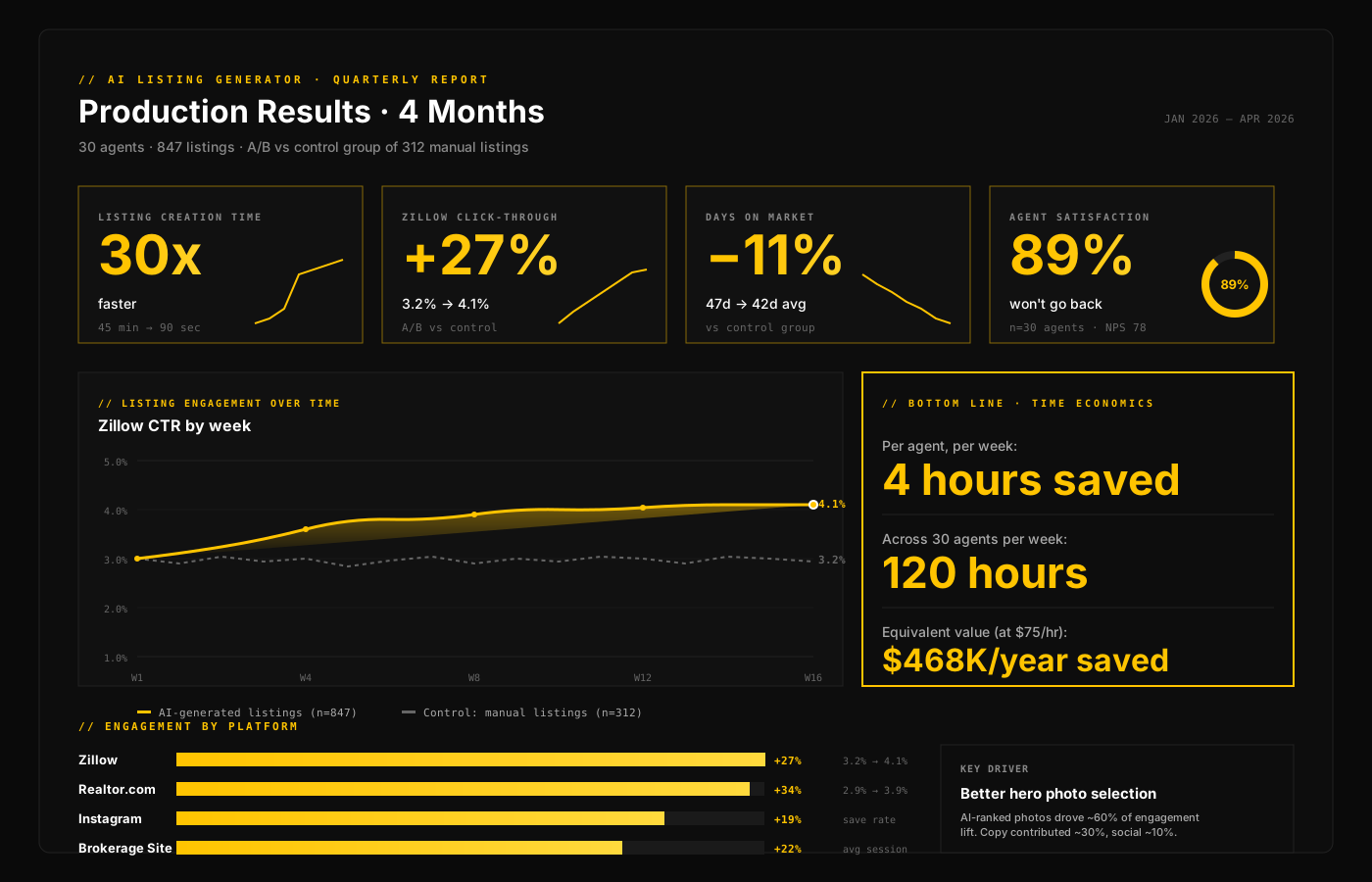
Across documented brokerage deployments, the metrics are remarkably consistent:
- Listing creation time: from 45 minutes to under 2 minutes — a 25-30x improvement
- Time saved per agent: 3-5 hours per week on average, more for top producers
- Zillow click-through rate: typically up 20-30% vs. manually-created baseline
- Realtor.com engagement: up 25-35% (driven mostly by better photo ordering)
- Days on market: down 8-12% for AI-generated listings vs. control groups
- Agent satisfaction: typically 85%+ won't go back to manual creation
- Compliance: fair-housing violation rate drops sharply when validation is enforced
The agent satisfaction number is the surprising one. Many brokerages worry about pushback — would experienced agents see this as threatening, as cutting corners, as cheapening their craft? In practice, agents reframe it. The AI isn't replacing their judgment, it's eliminating the part of the job they hated. The strategic work — pricing, positioning, negotiation, client relationships — stays with them.
Common Mistakes Brokerages Make
Mistake 1: Skipping Brand Voice Training
The most common failure mode: deploying a generic AI tool and hoping the outputs match the brokerage voice. They never do. Agents reject 50-70% of outputs in the first week and the rollout stalls. Brand-voice fine-tuning isn't optional — it's the single biggest determinant of agent adoption.
Mistake 2: Trusting the LLM to Be Factual
Without explicit factual grounding, models occasionally invent features — claiming "tile flooring throughout" when bedrooms have carpet, or mentioning a pool that doesn't exist. Production tools enforce strict grounding: every claim in the generated copy must be traceable to either the structured data sheet or a high-confidence feature detected in the photos. Anything else gets stripped.
Mistake 3: Ignoring Photo Readiness
A poorly-tuned system can put a "before renovation" photo as the hero image because it scores high on composition. Good tools add a "listing-readiness" filter that detects construction debris, empty rooms, staging markers, and incomplete renovations — those photos get filtered out of the hero selection pool.
The Production Stack
A typical production-grade AI listing generator combines:
- GPT-4 (LoRA fine-tuned on brokerage copy) for description and copy generation
- CLIP-based vision model fine-tuned for real estate room classification
- Custom YOLOv8 model for property feature detection
- LangChain for orchestration and the retrieval pipeline
- Pinecone for comparable listing search
- Stable Diffusion-based image quality scoring
- Python + FastAPI for the AI pipeline backend
- Next.js + React for the agent-facing interface
- PostgreSQL for listing data and analytics
- Direct API integrations with MLS, Zillow, Realtor.com, and the brokerage CMS
What This Means for Brokerages
Manual listing creation is a solved problem. If your agents are still spending 45 minutes per listing on copywriting and photo prep, you're leaving money on the table — and you're losing agents to brokerages that have automated this. The question is not whether AI listing tools work. They work. The question is whether you implement them with enough discipline to maintain brand voice, factual accuracy, and compliance.
A generic ChatGPT prompt won't get you there. A purpose-built pipeline with computer vision, retrieval-augmented generation, brand-voice fine-tuning, and rigorous validation will. Done right, brokerages cut listing creation from 45 minutes to 90 seconds, increase engagement on every major portal, and free up 3-5 hours per week per agent for the work that actually closes deals.
Looking to Build One?
If you're a brokerage, MLS, or PropTech company looking to automate listing creation, photo workflows, or property descriptions at scale — get in touch. We'll walk through what a 6-week pilot would look like with your data and your agents.